Microfiber Hair Wraps vs. Flat Towels: What Actually Fits?
Choose a hair towel by the shape of your wet hair, what you do after the shower, and how the towel will dry between uses.
In this guide
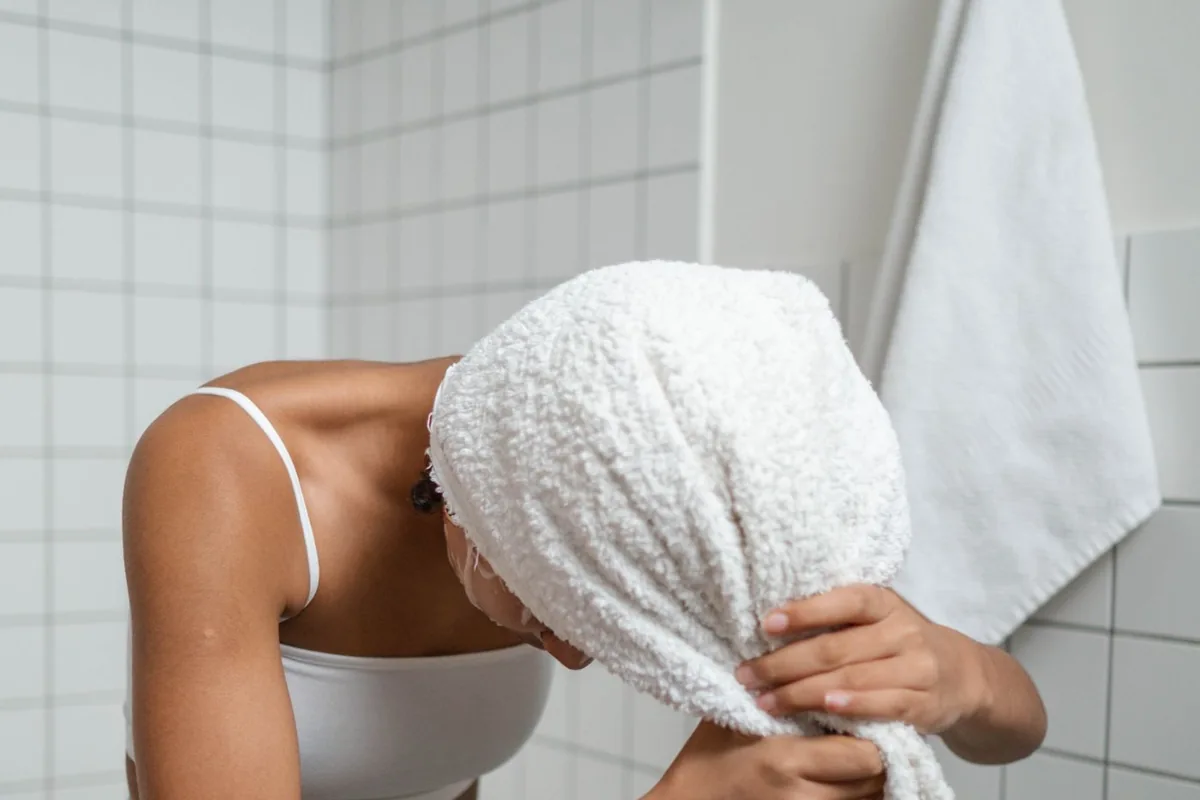
When you finish a shower in a busy house, the few minutes afterward rarely belong to your hair alone. You might put on sunscreen, get a child dressed, or pack lunch while the towel keeps sliding down the back of your neck. A shaped hair wrap can keep wet lengths out of the way. A flat towel may make more sense if you want to squeeze water from your hair without twisting it up. You can usually make this decision before you consider any claim about speed or how much water a fiber absorbs.
The useful distinction is between a towel that you wear and a towel that you use in your hands. Think about how long you want it to stay in place and what needs to fit inside it. Then ask where the fabric will hang afterward. A wrap that stays secure on your head can still be frustrating if it remains damp until the next day in a shared bathroom.
Check whether you need a wrap, a blotting towel, or both
A tapered wrap gives the ends of the hair and the fabric somewhere to go. The Turbie Twist Microfiber Hair Towel is one example. It uses a twist-and-loop design rather than asking you to tuck a broad corner of a bath towel into itself. This changes the feel of the routine more predictably than a claim about how fast any particular hair type will dry. If the loop is easy to fasten and the shape holds your hair without a tight twist, you can get on with the rest of your routine with fewer interruptions.
A flat towel gives you more control over which area you blot and how much pressure you use. For curls, that may mean pressing upward around a few sections and then leaving them alone while they dry. For short hair, it may mean drying just around the ears and nape before you style the front. You can choose a flat towel small enough to hang on a crowded rack, and you do not need to fit your entire head or every wet layer into a pocket. That matters if your current wrap pushes short pieces out around your hairline or reshapes curls while you are trying to preserve them.
There is no need to own both formats automatically. If you already use a flat hand towel to blot and then pin your hair loosely for five minutes, buying a new wrap only makes sense if the pinned style still drips or takes longer to set up. If you use a full-size bath towel and it holds your hair comfortably, a smaller wrap may save you storage and laundry space, but you can decide whether those are problems in your home.
Size by your wet lengths, then check the closure
Take the towel you normally use and fold it to a size that might fit the space you have. Use it after your next shower. Notice whether the ends need folding to fit, whether the bundle is wide at the nape, and where you instinctively reach to secure it. This gives you a rough minimum size without converting your head circumference into an online size chart. Wet hair can gather differently from dry hair, particularly if you have curls or several lengths of layers.
The closure deserves as much attention as the stated towel length. In a loop design, find the place the twisted end needs to reach once your hair is inside. A wrap might technically contain the lengths but leave little spare fabric to thread through the loop. If you have to twist the entire bundle much tighter to gain reach, choose a longer wrap or a shape with more space before the taper. The brand’s how-to instructions show how its closure is meant to work, and its FAQ describes an extra-long option. Check the version you are actually ordering, especially if listings reuse the same image across colors and sizes.
Test the motion with your dominant hand and then with the other if you usually switch sides. A broad elastic loop may be easy to find by feel. A button may give you a more definite stop if the towel has enough reach. If you need both hands to force the button through a small opening while the towel slides down, it may not be a practical replacement for the towel you already have. A closure that needs adjustment every time you move is a poor fit even if it looks tidy right after you put it on.
Decide how it will fit the ten minutes after your shower
If you put on makeup before touching your hair, a wrap can keep damp ends away from your neck and collar while you work. Put it on after gently squeezing out the water that would otherwise drip, then do the next step at the mirror. Take it off when you want to check the hair and continue styling. You do not have to leave it on for a set number of minutes just because someone else recommends that timing. How much moisture you want left depends on what you do next.
If you air-dry curls and want to keep the sections you just formed, start by blotting each area instead of putting all the hair in a twist. When you unwrap hair that has been held in one direction, some sections may sit differently from the way you set them in the shower. That can be fine if you plan to restyle anyway. If you prefer to keep your clumps intact and usually have a little time to wait, a flat towel or the same wrap used flat may work better.
If you style a fringe soon after the shower, leave it out rather than expecting it to settle correctly after ten minutes inside a towel. Blot around the nape and keep the front separate. Short hair may need very little time in a wrap, but being able to control those first few minutes can still be useful.
| Habit or frustration | First thing to compare |
|---|---|
| Wet ends drip while you get dressed | Wrap that closes easily around your full lengths |
| Curls change shape after twisting | Flat cloth large enough to blot several sections |
| Wrap fits but the loop will not reach | Extra length after the taper or a different fastening position |
| Bathroom stays damp between showers | A fabric weight and shape that can hang open on your rack |
| You travel with a small gym bag | A towel you can fold flat once it has dried |
Plan to wash and dry it the way you actually do laundry
Look at the care tag before you buy duplicates. The brand’s FAQ recommends avoiding fabric softener with its microfiber and gives low-heat drying guidance. Those details matter if your household usually washes everything together with softener or puts towels through a hot dryer. A product that requires a separate wash may introduce more work than it saves. If you already have a suitable cotton towel you can clean with the rest of your laundry, choose the new material only if the shape or bulk genuinely makes a difference.
A towel needs somewhere to dry after use. Unwind the fabric and hang it where the two surfaces are not pressed together. Pay particular attention to a thick seam and the tail of a wrap, because those areas may stay folded if you hang it from the smallest loop. In a bathroom with limited airflow, try hanging it elsewhere or choose a smaller towel you can drape flat. Buy a second towel only once you know the first one fits and your wash schedule leaves a real gap. For most readers, getting the shape, closure and drying spot right will matter on more days than any unverified promise of a faster blow-dry.